
DETERMIND - Marginalised Ethnic and Faith Groups Study
What is the study about?
Since 2019, we have been exploring inequalities (differences) and inequities (unfair differences) that are experienced by people living with dementia and their family carers. We have looked at inequalities and inequities that exist in the type and quality of care provided, and what happens to someone in the years following their diagnosis.
Our main DETERMIND study has shown that people from marginalised ethnic and faith groups can experience difficulties accessing dementia care. So we have started this ‘sub-study’ to DETERMIND (the sub-study is a smaller research project taking place within the larger DETERMIND project). By doing this sub-study, we want to better understand how we can ensure care is inclusive and allows the best quality of life for every person living with dementia.
We understand that the voices of people from marginalised ethnic and faith group haven’t been sufficiently included in our research, or wider research, in the past. Therefore, the team is committed to making sure our research feels safe to take part in and making sure that marginalised voices are heard throughout the study.
Who can take part?
We would like to recruit 300 people recently diagnosed (within the last six months) with dementia from minoritised / marginalised ethnic and faith groups.
For example, we would like to invite people who belong to the following groups:
Ethnicity: African, Arab, Asian, Black, Caribbean, Eastern European, Hispanic, Latin American, Mixed Ethnicity, Traveller Communities and people of any other marginalised / minoritised ethnicity.
Faith group: Buddhism, Hinduism, Islam, Jehovah’s Witness, Judaism, Sikhism or any other marginalised faith group.
If you are not sure whether this includes you, please get in touch.
Those who take part can choose to be supported by a friend of family member for their interview.
What does taking part in the study look like?
A pair of researchers from our friendly team will visit you in your home or somewhere where you feel comfortable. They will ask you a range of questions about your experiences, your health, your memory and your wellbeing. You can read about the friendly research team members who might visit you on our Take Part page.
A friend, family member or other carer can also take part in the study and support you through it.
Our visit will take approximately two hours. Sometimes the visit will be longer, sometimes it will be shorter, but we will work around your schedule to accommodate your needs. If you’ve had enough of answering questions at any point, we can stop the visit. There are no right or wrong answers - we want to learn from your experiences.
Unfortunately, we cannot pay people for their time taking part in the study.
Why is the study important?
By hearing about your experiences, we can start to:
Address inequalities in the dementia care pathway
Find out how we can improve care for people in your community in the future
Allows the best quality of life for people living with dementia and those who support them
Through this project, we will work closely with government and charities to advise on better policy and research across the UK and beyond.
Know someone who might be interested?
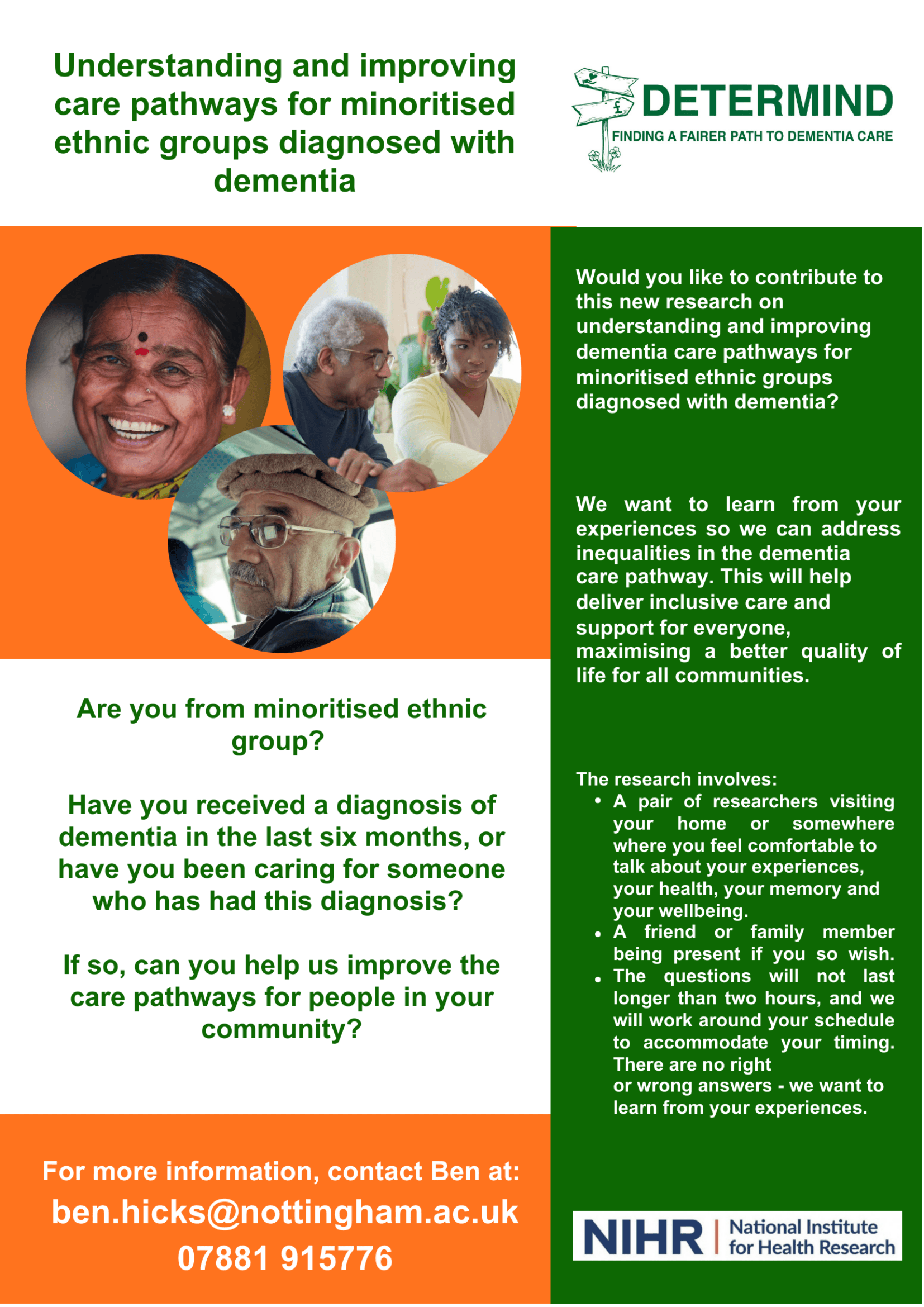
Download and print off our recruitment flyer for this study.
You could share it with:
A friend or family member
Your local community centre
An online peer support group
We are happy to translate any of our materials or send printed copies to your address. To request this, please Contact Us.
Interested in taking part or have more questions?
We would love to hear from you if you are from any marginalised ethnic or faith group and have received a diagnosis of dementia in the last six months.
Contact Dr Ben Hicks if you would like to take part, or if would like to ask any questions about the study.
Email: ben.hicks@nottingham.ac.uk or mobile: 07881915776.
After contacting us, you will not be under any obligation to take part in the study.
We are also recruiting people living with dementia who are LGBTQIA+!
Our other DETERMIND study is aiming to interview 150 people from the LGBTQIA+ community, at any point after a dementia diagnosis. If you are LGBTQIA+ and from a marginalised ethnic or faith group, you can take part in either study. You can find our more about the study here: